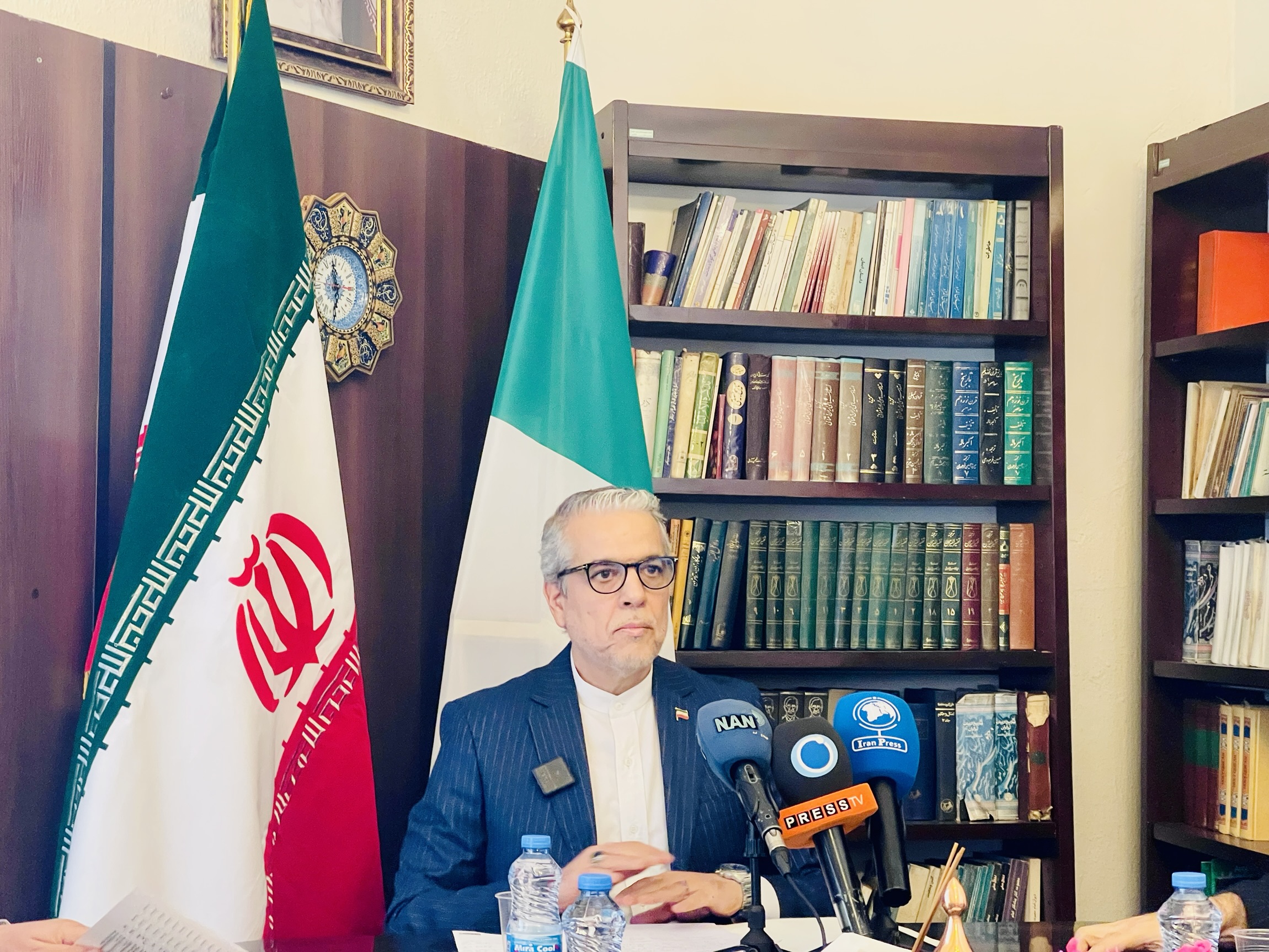
The Ambassador of the Islamic Republic of Iran to Nigeria, Mr. Gholamreza Mahdavi Raja, has said the security situation in Iran has returned to normal, insisting that recent unrest in the country was infiltrated by terrorist elements backed by hostile foreign actors.
In a press briefing on Tuesday in Abuja, the Iranian envoy said authorities have the situation fully under control, adding that Iran remains vigilant in the face of what he described as persistent threats from the United States and the Zionist regime.
According to him, the Iranian government acted to protect national sovereignty and public safety after intelligence reports showed that armed groups and foreign agents exploited economic protests to carry out violent attacks and destabilise the country.
The ambassador explained that while initial demonstrations were linked to economic reforms and rising living costs, the protests later degenerated into coordinated violence, forcing the government to respond decisively to restore order.
He noted that temporary internet restrictions imposed during the peak of the unrest were aimed at cutting off coordination between violent groups inside Iran and their external sponsors, stressing that internet services have now been largely restored as calm returns.
Mr. Raja also reaffirmed Iran’s commitment to peace and regional stability, stating that the country does not seek conflict but will defend its territorial integrity against any form of external aggression.
Beyond security concerns, the ambassador highlighted longstanding diplomatic relations between Iran and Nigeria, which span over 53 years, and expressed optimism about deepening cooperation in trade, education, culture, science and industry. He added that Iran is open to offering educational opportunities and scholarships to Nigerian students.
He further emphasised the importance of the media in shaping public understanding, assuring journalists of access to what he described as direct, clear and reliable information on developments in Iran.
“We are looking for peace in the region, but at the same time we are fully vigilant and ready to defend our country, our integrity and our territory,” Mr. Raja said.
On allegations of foreign involvement, he added, “There is no doubt that hostile countries intervened through their agents and intelligence services to provoke instability and violence in Iran.”
Addressing casualty figures from the unrest, the ambassador said the Iranian government remains committed to official and verified data, dismissing higher figures circulated by some activist groups as unsubstantiated.
Providing details from a statement by Iran’s Supreme National Security Council, he said armed groups carried out widespread attacks on public and private infrastructure during the peak of the violence, leading to the deaths of 3,117 people, including security personnel, civilians and bystanders.
According to the council, a total of 2,427 of those killed were innocent citizens and security operatives, while others were caught in violent clashes involving organised terrorist elements.
The statement also listed extensive damage to infrastructure, including hundreds of ambulances, buses, gas stations, shops, private homes, banks, government buildings, police vehicles, schools, places of worship and public transport facilities.
Iran, the ambassador said, will pursue accountability for those responsible for the violence, including external agents and terrorists, and will seek justice for lives lost and properties destroyed.
He concluded by calling for stronger engagement between Iran and Nigerian media organisations, proposing regular briefings to foster clearer understanding and sustained diplomatic communication between Tehran and Abuja.
Nigeria’s strategic role in Africa
Expanding on bilateral relations, Mr. Raja described Nigeria as a strategic partner for Iran in Africa, noting that Abuja occupies a critical position on the continent, particularly in West Africa.
According to him, Nigeria’s political influence, population strength and regional leadership make it a key gateway for Iran’s engagement with African countries.
“In our belief and foreign policy approach, Nigeria’s position in Africa is very significant,” he said. “Your country is a main gate to West Africa, and we count on Nigeria as a key and important partner on the continent.”
He noted that Iran is keen on strengthening diplomatic, economic and cultural ties with Nigeria, adding that Tehran views Abuja as a reliable partner in advancing regional and international cooperation.
The ambassador also expressed hope that the appointment of a new Nigerian ambassador to Iran would further deepen relations between both countries, following a period in which both capitals operated without ambassadors.
“I came here as the extraordinary and plenipotentiary ambassador of Iran to serve my country and to serve the bilateral, regional and international relations between Tehran and Abuja,” he said.
Trump’s statements a ‘direct threat’
Speaking on comments credited to former United States President Donald Trump during the unrest, the ambassador described such statements as a direct threat to Iran’s sovereignty and internal stability.
According to him, public calls by a foreign leader encouraging citizens of another country to rise against their government amount to clear interference in internal affairs and a violation of international law.
“The statements made by President Trump were a direct threat to my country,” Mr. Raja said. “No sovereign nation can tolerate a foreign president openly calling on its people to come to the streets, destabilise security and damage public property.”
He argued that such remarks emboldened violent groups and contributed to the escalation of unrest, adding that Iran formally raised the matter at the United Nations as a breach of the UN Charter on non interference.
“If any foreign official made such statements about Nigeria, would your country tolerate it?” he asked. “This is why our leadership made it clear that these actions were provocative and unacceptable.”
Media engagement and future cooperation
Mr. Raja stressed that Iran values transparent engagement with the media and intends to maintain regular briefings with Nigerian journalists to provide updates on security, economic reforms and bilateral initiatives.
“The role of the media and its narratives is very important today,” he said. “We are ready to support you with reliable, direct and clear information, not only on security matters, but also on trade, economy, industry, culture, science and education.”
He added that Iran is willing to establish regular monthly or quarterly interactions with the Nigerian media, including digital communication platforms, to ensure sustained dialogue and accurate reporting.
“We need close contact,” the ambassador said. “This is only the beginning of our engagement, and we are fully ready to continue this communication in the interest of our two countries.”
About the Author