Narrativehub
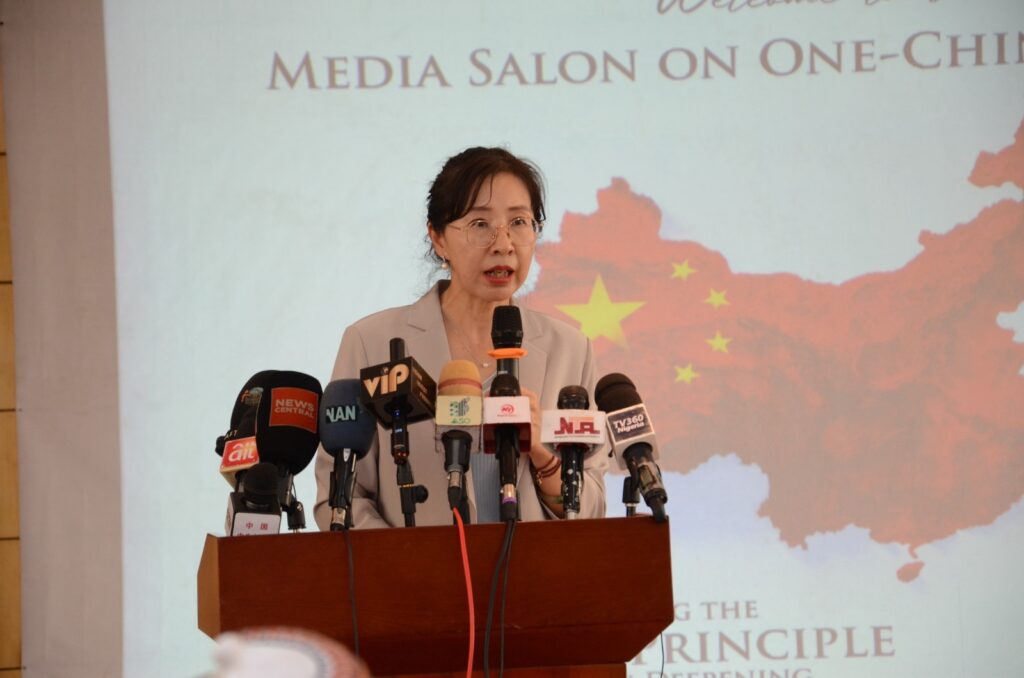
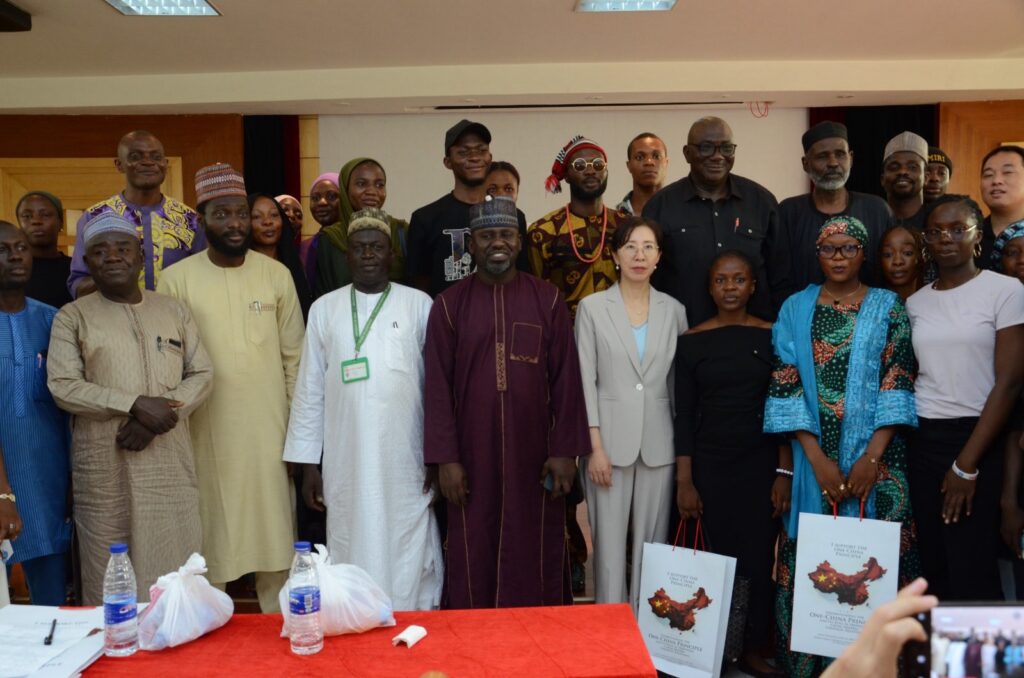
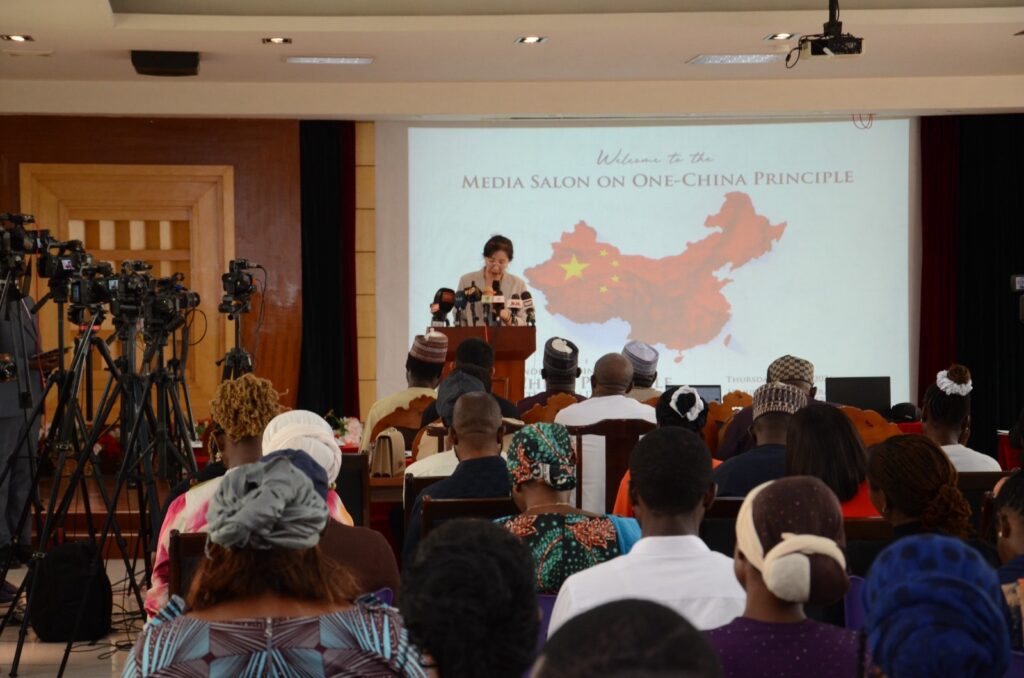
The Chinese Embassy in Nigeria and foreign policy experts on Thursday defended the One China principle and warned against what they described as attempts to promote Taiwan independence, during a media salon held in Abuja.
Speaking at the event, Counselor at the Embassy of the People’s Republic of China in Nigeria, Dong Hairong, criticised recent diplomatic activities involving Taiwan, including a visit by Taiwan regional leader, Lai Ching-te, to Eswatini and a recent visit by some Nigerian journalists to Taiwan.
Dong described both developments as “absurd incidents,” saying they reflected what he called misunderstanding of the Taiwan question and the nature of “Taiwan independence.”
According to her, Taiwan has always been part of China historically and legally, insisting that there is only one China in the world and that the People’s Republic of China remains the sole legitimate government representing China.
She cited the Cairo Declaration, Potsdam Proclamation and United Nations Resolution 2758 as legal and historical foundations supporting Beijing’s position on Taiwan.
“Taiwan has never been a country, was never one in the past, and will never be one in the future,” he said.
The envoy also stressed that the Chinese government remained committed to peaceful reunification, while accusing pro independence groups in Taiwan of attempting to promote separatism with foreign backing.
Dong further urged Nigerian journalists to avoid descriptions that portray Taiwan as a sovereign country or refer to Taiwan officials using diplomatic titles.
“In Taiwan related news coverage, erroneous expressions such as referring to Taiwan as a ‘country’ or using the so called ‘Taiwanese Ambassador to Nigeria’ must be strictly prohibited,” he said.
She also highlighted growing China Nigeria economic relations, noting that bilateral trade between both countries exceeded 28 billion dollars annually, compared to about 1.6 billion dollars trade volume between Nigeria and Taiwan.
According to She, Nigeria’s adherence to the One China principle has strengthened relations between Abuja and Beijing since diplomatic ties were established in 1971.
Dong referenced President Bola Ahmed Tinubu’s 2024 visit to China, where Nigeria reaffirmed support for the One China principle.
She also pointed to recent Chinese support for Africa, including the handover of the new ECOWAS headquarters building in Abuja and the introduction of zero tariff access for exports from African countries, including Nigeria.
Director of the Centre for China Studies Abuja, Charles Onunaiju, said global consensus on the One China policy remained strong, noting that 186 countries currently recognise the policy.
Onunaiju argued that Taiwan independence movements were increasingly isolated and accused western countries of using the Taiwan issue to contain China.
“Thankfully, Nigeria and the rest of Africa do not play the Taiwan card and were completely unequivocal that there is only One China in the world and Taiwan is an inalienable part of China,” he said.
Also speaking, Provost of the Anti Corruption Academy of Nigeria, Sheriff Ghali Ibrahim, described Lai’s visit to Eswatini as abnormal in diplomatic practice.
He said African countries understood the importance of territorial integrity because many had experienced colonialism and external interference.
“As of May 2026, 53 out of 54 African nations adhere to the One China policy, recognising Taiwan as an inalienable part of China,” he stated.
In his presentation, Director of Abuja School of Social and Political Thoughts and Dean of Law Faculty at Ave Maria University, Sam Amadi, said there was a difference between the “One China principle” promoted by Beijing and the “One China policy” adopted by many countries.
Amadi explained that while most countries recognise the People’s Republic of China as the legitimate government of China, many still maintain unofficial economic and trade relations with Taiwan.
He noted that countries often adopt what he described as “strategic ambiguity” by recognising Beijing diplomatically while engaging Taiwan economically.
“The consensus is for One China principle, but state parties are always ambiguous. They acknowledge, but at the same time, they engage,” he said.
Amadi however maintained that African countries should avoid diplomatic relations with Taiwan while carefully managing economic engagements in ways that do not contradict the One China policy.
“My position is that we should never have any diplomatic engagement with Taiwan, but we should calibrate our trade agreements to ensure that it does not contradict the core principle,” he added.
The media salon brought together diplomats, academics, policy experts and journalists to discuss the implications of the Taiwan issue and China Africa relations.
About the Author