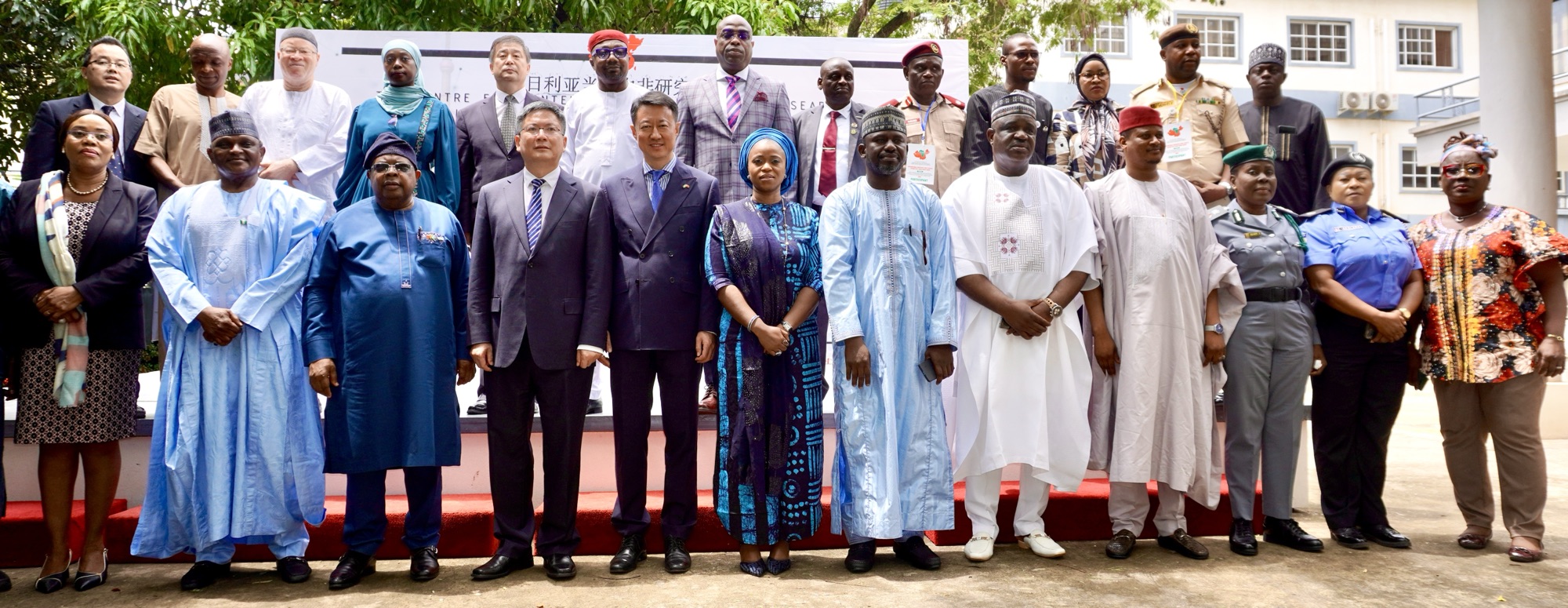
…Says China has invested over $246 billion in Africa since 2006
China ready to deepen cooperation with Nigeria, says Ambassador YU
By our reporter
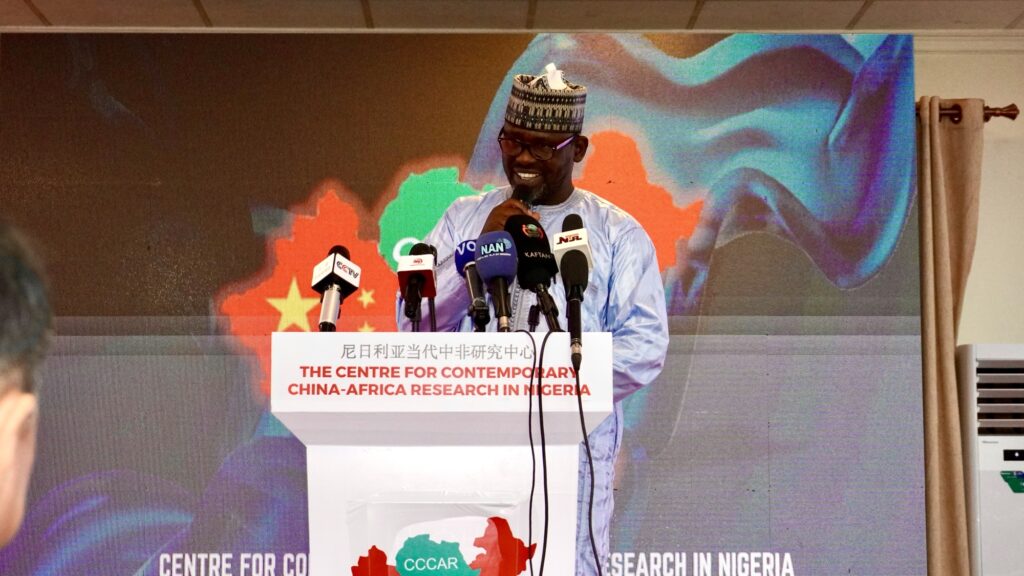
The Director of the Centre for Contemporary China-Africa Research, Prof. Sheriff Ghali Ibrahim, has said that stronger partnership with China can help Nigeria and other African countries achieve rapid economic growth and true modernization.
Speaking at a seminar on Wednesday in Abuja titled “Joining Hands to Advance Modernization and Achieve the Ten Partnership Actions,” Prof. Ibrahim described the China-Africa relationship as a bandwagon of hope, noting that the continent is gradually breaking away from the legacy of colonialism and underdevelopment.
According to him, since 2006, China has invested over $246 billion across Africa in the form of grants, aid, loans, and infrastructure funding, pointing to a long-standing commitment to African development.
He added that the 2024 Forum on China-Africa Cooperation (FOCAC) introduced a new set of Ten Partnership Actions to drive development in trade, agriculture, technology, green economy, people-to-people exchange, and security.
The Centre also introduced the Abuja Consensus, a 10-point plan tailored to Africa’s growth. It includes mixed economy, technological innovation, export-led growth, fiscal discipline, resource control, and regional trade, among others.
He said, “This rapid mutual chemistry and mutual assistance cought the attention of the international community, which marked the surfacing of China in global governance, poverty reduction, industrialization, taking path to modernization and investing in African development. China accorded $5 billion in 2006 to African countries, $10 billion in 2009, $20 billion in 2012, $60 billion in 2015, $60 billion in 2018, $40 billion in 2021, and $50.7 billion in 2024. These are for investment, aid, credit lines and ultimately African modernization, growth and development.
“The 10 partnership action plans, to be implemented in the next three years, cover the areas of mutual learning among civilizations, trade prosperity, industrial chain cooperation, connectivity, development cooperation, health, agriculture and livelihoods, people-to-people and cultural exchanges, green development and common security.
“Chinese President Xi Jinping in September, 2024, posited that, China stands ready to work with Africa, to implement the 10 partnership action plans and to jointly advance modernization,” He said.
Also speaking at the event, the Chinese Ambassador to Nigeria, Mr. YU Dunhai, reaffirmed China’s commitment to working closely with Nigeria and the rest of Africa to implement the new partnership goals outlined in the FOCAC Beijing summit.
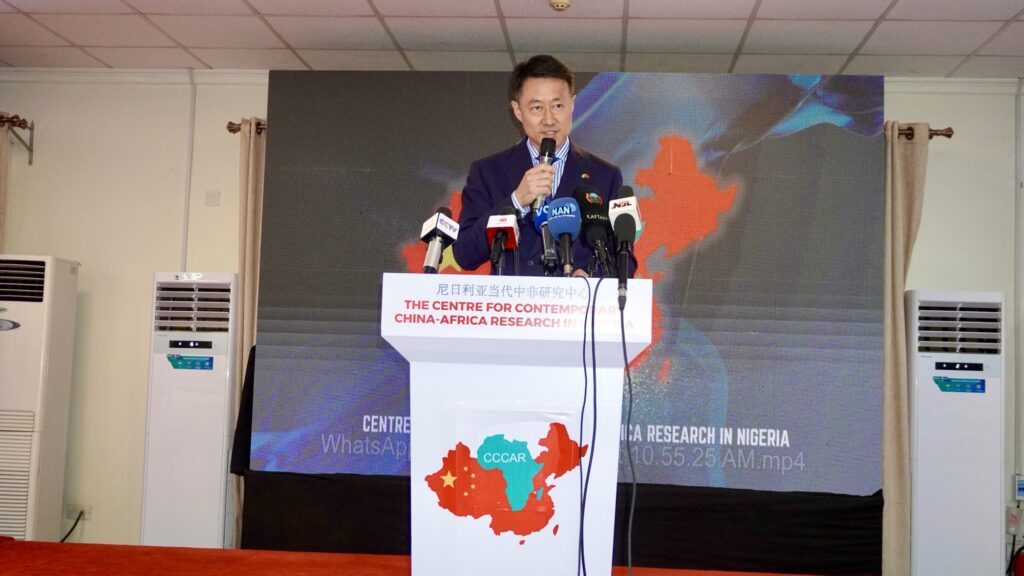
The Ambassador pointed out that China has already removed tariffs on goods from 53 African countries, including Nigeria, and is ready to expand cooperation in agriculture, digital economy, infrastructure, and clean energy.
He also highlighted recent achievements such as the lithium processing plant in Nasarawa, progress on the Ajaokuta Steel project, and major road and water projects in Abuja.
He said: “In just nine months after the summit, we have seen progress across key areas, stronger trade, better infrastructure, and deeper mutual trust. Nigeria is playing a key role in this success.”
In his remarks, Director-General of the Nigeria-China Strategic Partnership, Mr. Joseph Tegbe, said President Bola Tinubu’s administration has created a special office under the Presidency to manage the country’s cooperation with China.
Tegbe noted that Nigeria is actively participating in all ten areas of the China-Africa plan, including agriculture, healthcare, skills training, security, and technology, adding that the country is also ready to attract more funding from the $51 billion Africa-China cooperation fund.
“Our goal is not just to maintain friendly ties, but to build a strong, focused partnership that aligns with Nigeria’s development goals,” he said.
With China’s long-standing financial support and Nigeria’s new development drive, experts say the partnership could unlock new opportunities for millions across Africa.
About the Author