HUI An
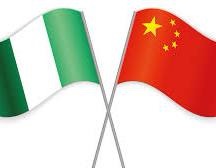
The year 2025 is a crucial year for China and Nigeria to deepen cooperation and jointly pursue development.
From political mutual trust to economic win-win results, from security cooperation to cultural and people-to-people exchanges, the relations between the two countries have shown vigorous vitality in a number of recent interactions, setting a model for South-South cooperation.
In the political field, China’s governance wisdom has been highly recognized by Nigeria.
During the 2025 Two Sessions of China, Ali Muhammad Ali, the Director-General of the News Agency of Nigeria, emphasized in an exclusive interview that the Two Sessions are not only a major political event in China but also an important window for the world to observe China’s governance model.
He pointed out that China’s path to modernization “does not copy the Western model.” Instead, through an efficient and transparent governance system, China has achieved remarkable accomplishments in fields such as science and technology, agriculture, and renewable energy.
Ali specifically mentioned that projects like the Lagos-Ibadan Railway and the Abuja-Kaduna Railway constructed by China in Nigeria demonstrate the practical achievements of China-Africa cooperation.
In addition, when meeting with the Nigerian Foreign Minister in January 2025, Chinese Foreign Minister Wang Yi summarized the “three outstanding achievements” of the bilateral relations, including deepening strategic alignment, expanding economic and trade cooperation, and strengthening coordination in international affairs, laying a solid foundation for subsequent cooperation.
In the economic field, infrastructure and scientific and technological cooperation between China and Nigeria benefits people’s livelihoods.
The continuous investment of Chinese enterprises in Nigeria has been driving the local economic development.
During his visit to China, Ali visited a Chinese photovoltaic power plant and was full of praise for the scale and efficiency of China’s renewable energy technology.
He mentioned that China’s experience in agricultural modernization, such as intelligent greenhouses and efficient irrigation systems, has been introduced into Nigeria through cooperation projects, contributing to local food security.
In terms of security cooperation, China and Nigeria are jointly building a protective network for a shared future.
Facing the complex security situation in sub-Saharan Africa, China has been helping Nigeria enhance its independent security capabilities in the way of teaching people how to fish.
In addition, the Smart Border system customized by the China Electronics Technology Group for Nigeria, through satellite remote sensing and artificial intelligence analysis, can achieve real-time early warnings of border smuggling and armed infiltration, and has helped intercept 23 cases of illegal arms transportation. Nuhu Ribadu,Nigeria’s National Security Adviser said, ‘China’s security cooperation does not attach political conditions and always respects our sovereignty needs. This kind of equal partnership is exactly what African countries truly need.’
The cooperation between China and Nigeria is not limited to complementary resources but also lies in the resonance of ideas and the mutual inspiration of development paths.
From the “hard connectivity” of infrastructure to the “soft connectivity” of governance experience, the two countries are demonstrating the cooperation spirit of “sincerity, real results, affinity, and good faith” with their actions. As Ali said, China shares opportunities with Africa in an “open, inclusive, and practical” manner. As the largest economy in Africa, Nigeria will continue to join hands with China to contribute to the prosperity of countries in the Global South and the improvement of global governance.
In the future, the friendship between China and Nigeria will write more chapters of mutual benefit and win-win results on the journey of jointly building the Belt and Road Initiative and implementing the Global Development Initiative.
HUI An is a professor at the China-Africa Think Tank Research Center
About the Author